Toyota to Showcase Liquid Hydrogen-Powered Race Car at Le Mans

 React
React

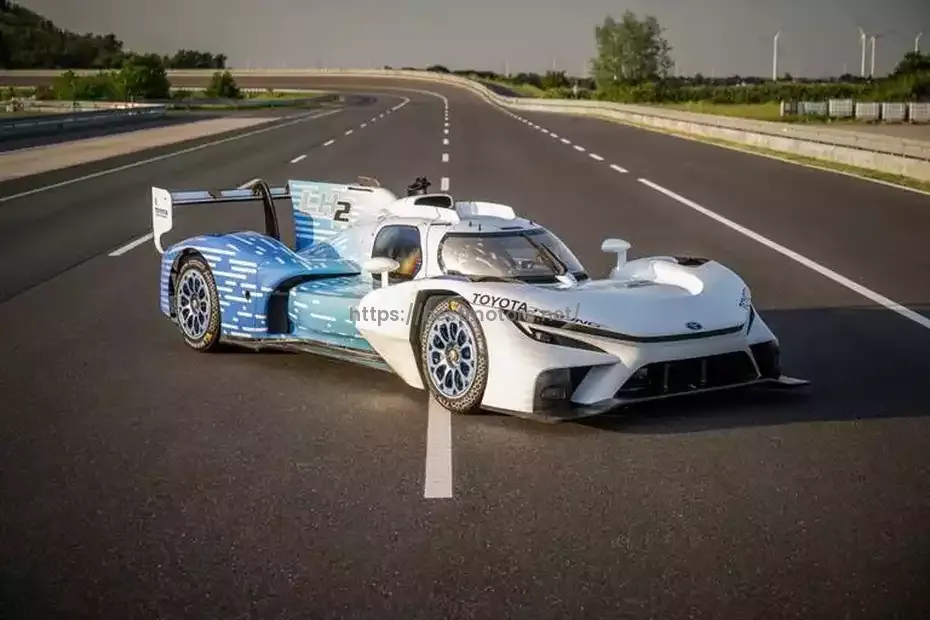
Toyota is set to unveil its latest hydrogen-powered racing prototype at one of motorsport’s most iconic events. The company will publicly showcase the TR LH2 Racing Prototype, a race car powered by liquid hydrogen, during the 2026 Le Mans 24 Hours week at France’s legendary Circuit de la Sarthe.
The project represents Toyota’s latest effort to advance hydrogen-powered internal combustion engine technology and explore alternative paths toward carbon-neutral motorsports.
Toyota’s Hydrogen Race Car Will Make Public Demonstration Runs
According to Toyota Gazoo Racing, the TR LH2 Racing Prototype will perform demonstration laps at the Circuit de la Sarthe ahead of the main race weekend.
The vehicle is scheduled to appear before thousands of spectators, giving fans a rare opportunity to experience the sound and characteristics of a hydrogen-fueled combustion engine in a competitive racing environment.
Unlike many emerging hydrogen projects focused on fuel-cell technology, Toyota’s prototype takes a different approach by retaining a traditional engine architecture while using hydrogen as its fuel source.
Built on Toyota’s Le Mans Hypercar Platform
The TR LH2 Racing Prototype is based on the same chassis platform used by Toyota’s current Le Mans Hypercar challenger, the Toyota GR010 Hybrid.
By utilizing an existing endurance-racing platform, Toyota hopes to accelerate the development of hydrogen technology under real-world racing conditions.
The company plans to use the prototype to gather valuable data on:
- Hydrogen fuel storage systems
- Internal combustion engine performance
- Refueling procedures
- Thermal management technologies
- Long-distance endurance reliability
Engineers believe motorsport can provide a faster development environment than traditional laboratory testing, allowing new technologies to be refined under extreme operating conditions.
Hydrogen Combustion Engine Replaces Fuel-Cell Technology
One of the most distinctive aspects of the TR LH2 Racing Prototype is its use of a hydrogen-fueled internal combustion engine rather than a hydrogen fuel-cell powertrain.
Fuel-cell vehicles generate electricity through a chemical reaction between hydrogen and oxygen. Toyota’s race car instead burns hydrogen directly inside a combustion engine, preserving many of the characteristics enthusiasts associate with traditional motorsports.
Supporters of hydrogen combustion technology argue that it offers several advantages:
Traditional Racing Sound and Character
Unlike fully electric race cars, hydrogen combustion engines maintain engine noise, vibration, and mechanical responsiveness that many fans consider integral to motorsport.
Fast Refueling Capability
Hydrogen can potentially be replenished much faster than charging large battery packs, making it attractive for endurance racing formats such as Le Mans.
Long-Distance Performance
Hydrogen-powered combustion engines may offer advantages in sustained high-performance applications where weight, range, and quick pit stops are critical factors.
Major Challenges Still Remain
Despite growing interest from automakers and racing organizations, hydrogen combustion technology still faces significant technical hurdles.
Hydrogen Storage and Cooling
Liquid hydrogen must be stored at extremely low temperatures, requiring specialized tanks and sophisticated thermal management systems.
Infrastructure Requirements
Large-scale hydrogen adoption would require extensive investments in production, transportation, and refueling infrastructure.
Efficiency Questions
While hydrogen combustion can reduce carbon emissions, some industry experts argue that fuel-cell systems and battery-electric vehicles may offer higher overall energy efficiency.
Why Le Mans Is Important for Hydrogen Technology
Le Mans has long served as a proving ground for breakthrough automotive technologies. Innovations such as hybrid powertrains, advanced aerodynamics, and energy recovery systems have all been refined through endurance racing before reaching production vehicles.
Toyota believes hydrogen could follow a similar path.
By putting the TR LH2 Racing Prototype in front of the global motorsports community, the company aims to demonstrate that hydrogen-powered internal combustion engines remain a viable contender in the future of sustainable racing.
As the automotive industry explores multiple pathways toward carbon neutrality, Toyota’s Le Mans debut could become one of the most closely watched hydrogen technology demonstrations in motorsport.