2026 Mercedes-Benz CLA 350 EV Crushes Official EPA Range Rating in Real-World Test

 React
React

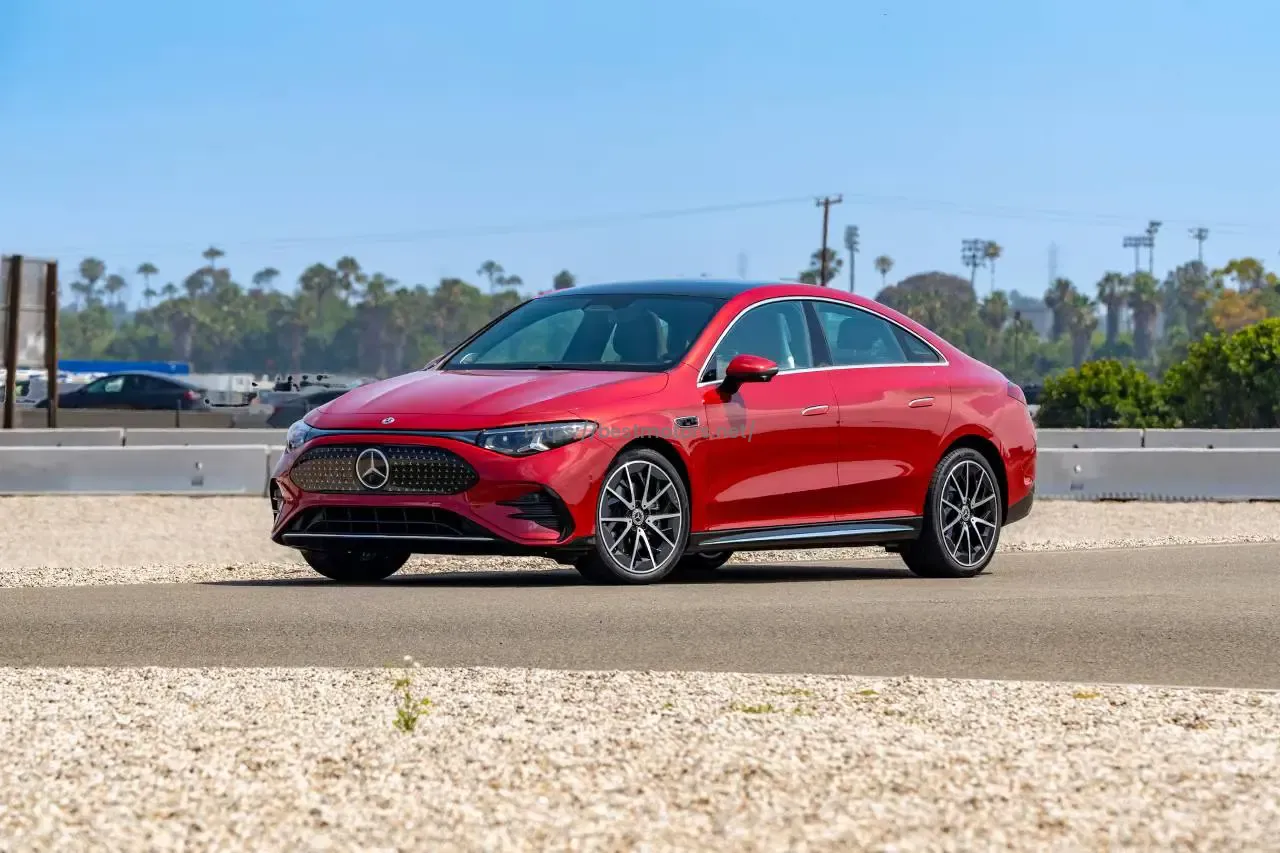
The all-new 2026 Mercedes-Benz CLA 350 4MATIC has delivered a surprising performance in independent real-world testing, significantly outperforming its official EPA range estimate and establishing itself as one of the most efficient premium electric sedans currently available.
In a recent range evaluation conducted by automotive publication Edmunds, the dual-motor electric CLA traveled 620 kilometers (385 miles) on a single charge—an impressive result that exceeded its official EPA-rated range by 118 kilometers (73 miles).
Real-World Range Far Exceeds EPA Estimate
Mercedes-Benz lists the CLA 350 4MATIC with an EPA-estimated range of 502 kilometers (312 miles). However, during Edmunds’ real-world testing, the vehicle achieved a remarkable 620 kilometers before depleting its battery.
The result places the sedan much closer to its European WLTP rating of 773 kilometers (480 miles), a testing standard generally viewed as more optimistic than EPA measurements.
The strong performance suggests the new CLA platform may be considerably more efficient in everyday driving conditions than official U.S. certification figures indicate.
Efficiency Numbers Beat Expectations
The range advantage was accompanied by better-than-expected energy efficiency.
Mercedes-Benz rates the CLA 350 at approximately 18 kWh per 100 kilometers. During the Edmunds test, however, energy consumption averaged just 16 kWh per 100 kilometers.
That improvement helped the vehicle achieve its exceptional range result while reinforcing Mercedes-Benz’s focus on efficiency rather than simply increasing battery size.
Charging Performance Also Surpassed Official Figures
The new CLA impressed not only with its driving range but also with its charging capabilities.
Mercedes states that the CLA 350 supports peak DC fast-charging speeds of up to 320 kW.
During testing, however, the vehicle reportedly reached a maximum charging rate of 349 kW—29 kW above the official specification.
If replicated consistently in real-world charging conditions, that level of charging performance could place the CLA among the fastest-charging EVs currently available.
CLA 250+ Previously Delivered Similar Results
This is not the first time Mercedes’ new electric CLA lineup has exceeded expectations.
Last year, Edmunds tested the single-motor Mercedes-Benz CLA 250+ and recorded a range of 698 kilometers (434 miles), outperforming its EPA estimate by approximately 97 kilometers.
Both vehicles use the same 85 kWh battery pack, but their powertrain configurations differ significantly.
CLA 250+
- Single rear-mounted electric motor
- 268 horsepower
- Rear-wheel drive
CLA 350 4MATIC
- Dual-motor all-wheel-drive system
- 349 horsepower
- Enhanced performance and traction
Despite its additional power and all-wheel-drive hardware, the CLA 350 still delivered exceptional efficiency.
Why the Results Differ From EPA Ratings
One factor behind the impressive outcome may be differences in testing methodology.
Edmunds’ range test consists of approximately:
- 60% city driving
- 40% highway driving
The average speed during the test is around 64 km/h (40 mph).
EPA testing, by comparison, follows a different protocol with roughly 55% city driving and 45% highway driving.
Edmunds argues its approach more accurately reflects how modern EV owners use their vehicles in everyday conditions, potentially explaining why some models outperform official government ratings.
Mercedes CLA Outperforms Several Key Rivals
According to Edmunds’ testing data, the new CLA 350 4MATIC achieved a longer real-world range than several major competitors in the premium EV segment.
Notable comparisons include:
- Tesla Model 3 Rear-Wheel Drive – 546 km (339 miles)
- BMW i4 eDrive40 – 470 km (292 miles)
- Hyundai Ioniq 6 Rear-Wheel Drive – 552 km (343 miles)
The results suggest Mercedes-Benz may have created one of the most efficient long-range electric sedans currently available in the luxury market.
A Strong Start for Mercedes’ Next-Generation EV Platform
The impressive showing from both CLA variants highlights the potential of Mercedes-Benz’s next-generation electric architecture.
Rather than relying solely on larger battery packs, the company appears to be focusing heavily on drivetrain efficiency, aerodynamics, thermal management, and ultra-fast charging technology.
If future independent tests continue to validate these results, the 2026 CLA could emerge as one of the benchmark electric sedans in its class.